A face serum supplier has to keep ingredients stable that degrade on their own: vitamin C oxidizes, retinol loses potency in heat, peptides denature over time. The damage appears after the lab test and before your customer opens the bottle.
This guide audits a face serum manufacturer on the points a price quote cannot show: active-by-active stability handling, freeze-dry and encapsulation technology, packaging and fill-line controls, certificates with a real scope, and clinical evidence tied to a named formula. Deciding between a private-label serum and a custom formulation first? Those routes change what you negotiate, not what you audit below.
Key Takeaways
- A face serum supplier’s core capability is active stability, not certificates alone. Ask how each mixing, filling, packaging and freight step is controlled.
- Judge actives one by one: vitamin C, retinoids and peptides each fail in a known way and need a named fix — pH buffering, light protection, cold processing.
- Freeze-drying and encapsulation are the delivery systems that keep high-activity formulas stable; check which ones run in-house.
- Look for ISO 22716 (GMPC) from a named auditor, plus FDA facility registration and a documented cleanroom class for filling.
- Clinical data should attach to specific formulas, and batch-to-batch consistency with full-chain traceability should survive re-orders.
Why a Serum Audit Is Harder Than a Cream
A moisturizer mostly has to stay emulsified and safe. A serum carries unstable actives at working doses, so the audit has to cover different ground: the ingredient, the delivery system, and the packaging.
Active-by-Active Failure Points
Each hero active fails in its own way, and a supplier’s answer on each one separates a serum lab from a cream line. Run these four checks:
- Vitamin C (L-ascorbic acid): oxidizes from clear to amber within weeks. Ask how the formula buffers pH to about 2.5–3.5, and whether production uses nitrogen blanketing and opaque, airless packaging.
- Retinoids: light-sensitive and prone to isomerization. Ask about encapsulation, light-protected processing, and a nitrogen headspace at filling.
- Peptides: denature with heat. Ask whether peptides are added cold, below about 40°C; a factory that adds them in the hot phase has already failed the check.
- Hyaluronic acid: behaves differently by molecular weight. Ask how the lab blends high- and low-MW grades so viscosity and penetration stay in balance.
The 포장 Factor Most Buyers Skip
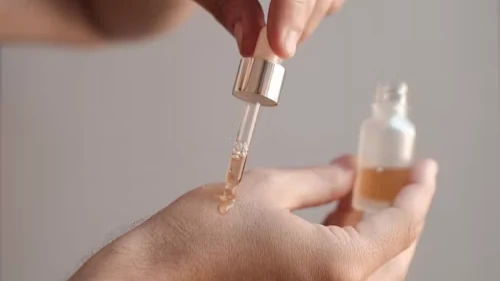
One failure mode never appears on a spec sheet: the open-jar problem. Every time an end user opens a dropper bottle, air and light enter, and bathroom heat cycles speed the reaction. A supplier that plans for what happens after delivery protects the batch past the factory gate.
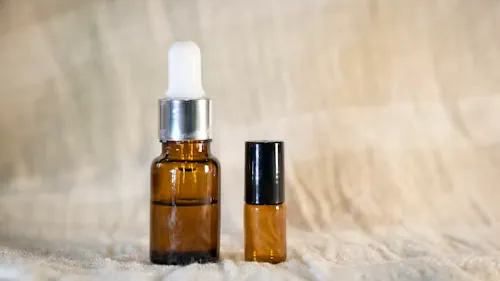
Ask how the fill line and the primary pack protect actives: airless or piston pumps that limit oxygen, UV-protective or opaque glass for light-sensitive formulas, controlled headspace, and nitrogen flushing at filling. A passing stability report alone does not cover months of open-bottle use.
The Core Test: Active Stability Capability
Stability is a chain from raw material to the sealed bottle, not one box to tick. Audit it step by step, and ask what equipment sits behind each step.
Walk the Production Chain and the Equipment Behind It
Ask how each step is controlled, not whether the formula is stable. Factories that answer the second question well rarely need to be asked the first. Walk the chain:
- Mixing: oxygen enters the batch at this step; ask about inert or low-shear handling, a vacuum homogenizer for deaeration, and 316L stainless tanks that tolerate acidic actives.
- Filling and sealing: headspace stays in the bottle; ask how headspace is controlled and whether the line runs nitrogen flushing on airless or piston fillers.
- Sea freight: months of heat-and-cold swings; ask whether the mandatory stability test simulates that route or only room-temperature storage.
Raw-material storage counts too: peptides and similar actives need temperature-controlled warehousing, and the factory should be able to name the cleanroom class of its filling area.
The Testing Battery to Demand
Then ask for the evidence on your own formula. A serious serum factory runs stress testing before any bulk release: heat-and-cold extreme-stability cycling, preservative challenge, microbial screening, and pH and viscosity checks, with chromatographic analysis available when active content needs verifying. A factory that runs these tests produces the protocol quickly; one that does not keeps reassuring you instead. See the full list in our serum stability testing guide.
Ask for the stability evidence up front
Tell us the active you plan to launch and your target claim. We will document how it is stabilized and share the relevant test evidence before you commit a deposit.
Active Ingredient Delivery Systems and Stability
Different active ingredients require different delivery methods to maintain stability and perform as intended. Buyers should understand which technologies a manufacturer offers and whether they suit the planned serum formula.
Freeze-Drying for Sensitive Actives
Freeze-drying removes water from a frozen formula under vacuum, producing a dry format that can help protect certain sensitive ingredients during storage. It is particularly relevant to peptide-based and other moisture-sensitive formulations that are designed for reconstitution before use.
However, freeze-drying is not necessary for every face serum. Its suitability depends on the active ingredients, formula design, packaging, and intended use. If you plan to develop a powder-and-solvent serum system, ask whether the manufacturer has in-house lyophilization equipment or works with an external processing partner. Request relevant process records and stability data to understand how the finished product performs after reconstitution.
Encapsulation and Dual-Chamber Packaging
Encapsulation uses carriers such as liposomes or other delivery systems to protect selected ingredients within a formulation. Depending on the material and formula, it may help improve ingredient stability, control release, or support delivery to the intended skin layer. However, these benefits depend on the specific technology and require appropriate testing.
Dual-chamber packaging offers another option for formulas containing ingredients that should remain separate until use. By storing two components in different chambers, the packaging can reduce unwanted contact during storage and combine them when dispensed.
When evaluating a manufacturer, ask which encapsulation methods it can support, which ingredients they are suitable for, and whether the work is handled in-house or through a qualified partner. Request relevant formulation and stability data rather than relying on technology names alone.
Certifications and Clinical Evidence Checks
Two files show what a factory can prove: the audit certificates and the test results. Check both, and read their scope.
Certificates That Actually Prove Something
A credible serum factory can produce, on request:
- ISO 22716 (GMPC): cleanroom production audited by a recognized third party such as SGS, Intertek, or TÜV, with the certificate scope and cleanroom grade visible, not just the badge.
- US FDA facility registration: issued for the plant that will actually fill your serum. Check the registration number against the FDA cosmetics database, and ask for MoCRA product-listing documentation for the US market.
- Market-specific support: HALAL coverage where relevant, plus cooperation on EU CPNP notification and Indonesia BPOM filing.
Treat a certificate without a named auditor and a document behind it as unproven. The pattern to reward is specificity: a supplier that names the auditor, the scope, and the cleanroom class without being pressed is used to being audited.
Clinical Data Tied to Real Formulas
A serum sells on an efficacy story, so check whether the supplier can back one up. Advanced factories validate through partner labs on specific formulas, and the numbers they publish trace back to a test, a window, and a method.
In one reported example, a cyclic-peptide freeze-dried powder reduced eight facial wrinkle lines by 30 에게 50 percent over 28 days, with firming measured at 13.42 times a standard hexapeptide. In another, a serum carrying 2 percent Synbio-charm FN raised stratum-corneum hydration by 18.98 percent and cut transepidermal water loss by 43.5 percent.
Those results belong to those two formulas, not to every serum the factory makes. Request the underlying test documentation for the product you intend to launch, with the formula name and date attached. A supplier that resists showing it asks you to buy a claim on faith.
Ingredient Supply Chain and Batch Consistency
Raw material sourcing and production records help buyers assess whether a face serum manufacturer can maintain consistent formulas across repeat orders.
Traceability from Raw Material to Release
A manufacturer’s ingredient supply chain starts with the companies that produce its raw materials. For key cosmetic ingredients, buyers should understand where the materials come from, which grades the manufacturer uses, and how it checks each incoming lot. Established suppliers such as BASF, Symrise, and Ajinomoto serve the cosmetics and personal care industries, although the right source depends on the active ingredient and its intended use.
A reliable manufacturer should maintain a Certificate of Analysis (COA) for each incoming raw material lot. This document records the material’s specifications and test results. Buyers can request a sample COA and ask how the factory connects raw material records to finished products. During supplier evaluation, focus on three points:
- Supplier information: Can the manufacturer identify the original source and grade of its key active ingredients?
- Incoming quality checks: Does it review each raw material lot against the required specifications before production?
- Lot traceability: Can it link a specific raw material lot to the finished products that contain it?
Ingredient sourcing also affects formulation flexibility. Some actives come in different grades, concentrations, or delivery forms, so the manufacturer needs to confirm which options suit the formula. For example, copper peptides may require different raw material specifications and use levels depending on the supplier and formulation design. Ask whether the manufacturer can source the required grade, adjust the formula when necessary, and maintain consistent ingredient specifications across repeat orders.
Batch Consistency and Production Records
A formula that works well in the first production run should remain consistent in later orders. However, changes in raw material suppliers, ingredient grades, or production conditions can affect the final product. Manufacturers need clear procedures to manage these changes and maintain consistent production standards.
Ask how the factory handles raw material substitutions and supplier changes. If an ingredient becomes unavailable, the manufacturer should explain the proposed alternative, its potential effect on the formula, and whether your approval is required before production. This matters particularly for serums built around specific active ingredients, where a change in raw material grade may affect the formula’s performance or product positioning.
Production records provide another way to assess batch consistency. A complete batch record should connect the finished product to its raw material lots and document key details, including:
- Formula version: The approved formula used for the production run.
- Material records: Raw material names, lot numbers, and actual quantities used.
- Production details: Manufacturing date and relevant process parameters.
- Quality results: Inspection and test results required before product release.
- Deviation records: Any departures from approved procedures and the corrective actions taken.
During supplier evaluation, request a redacted batch record from a previous production run. Check whether the factory can trace the ingredients used, identify changes between batches, and explain how it handles deviations. An ERP system can connect purchasing, inventory, and production records, but the quality of the underlying records remains essential.
For more information about Helement’s manufacturing facilities and technical capabilities, visit its factory and 아르 자형&D and laboratory pages.
The Serum Supplier Scorecard and Red Flags
A structured evaluation helps buyers compare manufacturers on technical capabilities, quality controls, documentation, and their ability to support repeat production.
The Scorecard to Fill In
Use the same questions and evidence requirements for every shortlisted manufacturer. This makes it easier to compare their capabilities and identify areas that need further verification.
| Evaluation Criteria | Questions to Ask | Evidence to Request |
|---|---|---|
| Active stability | How do you evaluate active stability in the finished formula? | Stability test plan and results for a comparable formula or your product. |
| Freeze-drying and encapsulation | Which processes are handled in-house, and which are outsourced? | Process details, available equipment, and relevant production examples. |
| Packaging compatibility | How do you select packaging for light-sensitive or oxidation-prone actives? | Packaging compatibility test results and material specifications. |
| Quality certifications | Which certifications does the manufacturing facility hold? | Valid certificates, issuing bodies, and applicable facility scope. |
| Regulatory compliance | Can you support the registration and documentation requirements of the target market? | Relevant facility registration details and product compliance documents. |
| Efficacy testing | How do you verify the performance of the finished serum? | Relevant test reports, methods, and results for the formula or product. |
| Batch traceability | Can you trace finished products back to their raw material lots? | Sample batch records, material lot records, and quality release documents. |
Use a simple three-level rating to compare suppliers:
- 2 – Verified: Clear answers with supporting documents.
- 1 – Partially verified: Some evidence provided, but further confirmation is needed.
- 0 – Not verified: No supporting evidence or clear explanation.
Prioritize criteria based on your formula and target market. Outsourced services are acceptable if the manufacturer can verify its partners and maintain quality control. Recheck key requirements before repeat orders.
Red Flags That End a Shortlist
Watch for warning signs that may indicate gaps in a manufacturer’s technical capabilities or quality controls:
- No relevant stability data: Cannot provide a suitable testing plan or results from comparable formulas.
- Unclear preservative system: Cannot explain the preservative choice or provide relevant microbial safety test results.
- Inconsistent samples or batches: Shows unexplained differences in color, texture, appearance, or agreed specifications.
- Unusually low quotations: Cannot explain major cost differences in ingredients, formulation, packaging, or testing.
- Unrealistic formula replication promises: Claims to copy any formula without reviewing its ingredients, specifications, or testing requirements.
A suitable manufacturer should support its claims with clear processes and relevant evidence. In-house production is not essential, but quality control, technical transparency, and consistent results are.
Vet the Evidence Before You Talk Price
A reliable face serum manufacturer should provide more than product samples and technical promises. Look for documented stabilization methods, stress-test results for your formula, certifications with clearly defined scopes, efficacy data relevant to your product, and consistent batch quality. Evaluating these factors first helps you compare manufacturers on technical capabilities rather than unit price alone.
As a skincare OEM manufacturer, H요소 offers in-house freeze-drying and encapsulation capabilities, SGS-audited ISO 22716 compliance, and efficacy testing through partner laboratories. 견적 요청 to discuss your target active ingredients and explore the testing and manufacturing support available for your serum project.
Frequently Asked Questions
How do I verify a serum manufacturer keeps actives stable?
Ask how each step from mixing to filling to freight is controlled, including packaging and headspace choices, then request a stress-test report on your own formula covering heat-and-cold cycling and active-level checks. A supplier that walks the chain step by step and produces the report is far stronger than one that only says the formula is stable.
What is freeze-dried serum technology?
It is vacuum lyophilization of a deep-frozen formula that removes water while holding high-activity ingredients inert, usually sold as a powder plus a matching solvent mixed at the point of use. It lets a serum carry peptides and other delicate actives that degrade in a liquid shelf formula.
What certifications should a face serum supplier have?
Start with ISO 22716 (GMPC) audited by a recognized third party, plus US FDA facility registration with MoCRA product-listing documentation, and confirm the certificate scope and cleanroom grade. These prove the process is controlled; pair them with stability and clinical evidence to prove the serum performs.
What packaging should an active-ingredient serum use?
Airless or piston pumps limit oxygen intake, UV-protective or opaque glass blocks light for photosensitive actives, and nitrogen flushing with controlled headspace keeps the fill step inert. Ask which packaging and filling options a supplier runs for your specific active, because a stable formula in the wrong bottle still fails in the customer’s bathroom.
Can a serum factory provide clinical efficacy data?
Advanced factories validate through partner labs and can share the underlying report for a specific formula. Treat published numbers as belonging to those tested formulas, not as a universal claim, and request the documentation for the exact product you intend to launch.
What should I ask a custom serum manufacturer before ordering?
Ask which stabilizing technologies run in-house, whether certificates and clinical reports are available for your formula, how batches are traced and kept consistent, and whether the active concentration can be tuned to your claim and price. Those four answers filter the market quickly.


