Tinted sunscreen demand grew 86.9% year over year across platforms, according to data tracker Spate. Yet most launches still fail deeper skin tones with ashy finishes, one supposedly universal shade, and gray undertones. This guide is for brands building tinted sunscreen for dark skin and distributors planning inclusive SPF ranges: it covers the pigment chemistry that eliminates white cast, the visible-light protection deep tones actually need, and the shade economics that decide whether the range survives its first reorder.
You leave with a shade-count strategy, a white-cast engineering checklist, and the batch-color QC questions that separate real factories from claimants.
Key Takeaways
- The tint is not cosmetic only: iron-oxide pigments filter visible light, the wavelength range that drives hyperpigmentation and melasma in deeper skin tones.
- White cast comes from filter particle size, dispersion quality and film thickness, which are engineering problems rather than inevitable mineral-sunscreen behavior.
- Shade strategy is a unit-economics decision: every shade carries its own MOQ, filling run, and batch-color validation, so a 10-shade range multiplies launch cost before the first unit sells.
- Batch-to-batch color consistency requires spectrophotometer QC and locked pigment standards, so ask how it is proven rather than whether it exists.
- A disciplined 4-shade launch with real undertone logic beats a rushed 10-shade ladder that runs out of budget at shade six.
Why Tinted SPF Exists: Three Jobs, One Product
Tinted sunscreen does three distinct jobs at once, and understanding them separately is what separates a considered formulation from a marketing one.
Visible-Light Protection
Conventional SPF numbers describe UVB filtering, and broad-spectrum claims cover UVA, but visible light, which is most of the solar energy reaching skin, is untouched by untinted formulas. Published dermatology research shows visible light triggers immediate and long-lasting pigmentation in richer skin tones and worsens melasma, and iron-oxide pigments, the same pigments that create the tint, block the responsible wavelengths. This is why dermatologists managing pigmentation disorders recommend tinted mineral SPF specifically. For deep skin, the tint is a clinical feature rather than a cosmetic one.
White-Cast Correction
Mineral filters such as zinc oxide and titanium dioxide are white powders. On fair skin a slight cast blends in, while on deep skin it reads as gray. Tint neutralizes the cast the same way makeup neutralizes undertone, letting a high-load mineral formula stay invisible on every skin tone. The filter basics behind this trade-off are covered in mineral vs chemical sunscreen.
Cosmetic Finish
The fastest-growing tinted products are skin tints and tinted moisturizers with SPF, the look often described as no-makeup makeup. Here tinted SPF competes with base makeup on coverage and finish, which is why the category increasingly belongs to factories that develop sunscreen and base-makeup lines together.

Pigment Systems and Shade Range Strategy
Developing tinted sunscreen requires balancing pigment performance, shade inclusivity, and formulation stability. These factors shape both pigment selection and shade range planning.
Pigment Systems for Deep Shades
The tint system is built from a small palette of cosmetic pigments, mainly iron oxides in red, yellow and black plus titanium dioxide for lift, blended into the SPF emulsion. Deep shades are structurally harder than light ones: they need higher pigment loads carried in a sunscreen base that must still spread thin, set evenly, and not transfer. Coated pigments and surface-treated grades disperse more evenly and resist reacting with the UV filters, while advanced emulsification techniques, including nano-scale emulsion systems and encapsulation originally built for skincare actives, carry pigment and filter together in one stable film.
That dispersion work is laboratory work, and a supplier with dedicated R&D laboratories can show pigment dispersion data rather than just describing it.Shade Architecture: The 4-to-12 Decision
Modern shade architecture is undertone-driven rather than a simple light-to-dark ladder: the same depth reads completely different with warm, neutral or cool undertones, which is why leading tinted launches describe shades by undertone families rather than just numbers. The range decision is an economics decision:
| Shade Count | What It Signals | Cost Reality |
|---|---|---|
| 4 shades | Light / medium / deep / true deep with a red undertone, which is credible inclusivity | 4 fill runs, 4 validations, contained budget |
| 8-12 shades | The complete range reviewers and retailers ask for, each depth in two undertones | 2-3x the fill runs, validations and inventory lines |
The difficulty is well documented: established brands have reported dozens of formulation rounds just to get pigment dispersion right. Dispersion, not pigment availability, is the technical bottleneck, and it is where development time actually goes.
Planning a tinted SPF line?
Send us your target skin-tone range and coverage level. We will propose a shade architecture, quote MOQ and cost per shade, and confirm the pigment and dispersion route that keeps deep shades free of gray cast, all before you commit to a range size.
Killing White Cast: The Engineering, Not the Marketing
No-white-cast promises appear on most mineral SPF marketing, but achieving them on deep skin is an engineering outcome with inputs a brand can actually specify.
Particle Size, Grade and Dispersion
Micronized and surface-coated zinc oxide and titanium dioxide scatter less visible light than coarse grades, so less scatter means less white, and the coating also improves photostability, which means the premium grade does three jobs at once. Dispersion quality then decides whether that advantage survives filling: unevenly dispersed pigment and filter settle into streaks that read as cast even when the formula averages out correctly. High-shear dispersion processes and the emulsification systems described above are what keep the film optically even.
Film Thickness at the Tested Dose
SPF testing assumes a specific application dose. A formula that needs a thick layer to reach its number will cast more than one engineered to protect at a thin, even film, so texture work that makes the tested dose wearable is white-cast work.
The SPF-vs-Coverage Trade-off
Higher filter load means more whitening to neutralize and more tint depth needed to hide it. Deep shades at high mineral SPF are the hardest cell in the matrix, and this is exactly where a tint should be treated as part of the formula rather than a post-hoc coloring step.
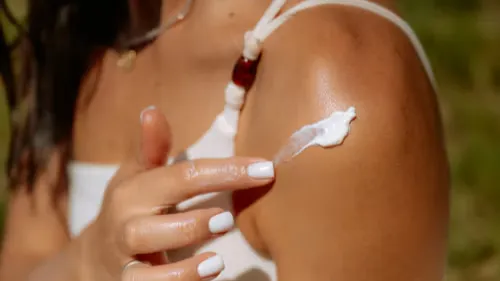
The honest way to verify all three is to sample the finished formula on the skin tones you are launching for, across shades, under daylight, and then check what the supplier’s sampling and inspection process covers. The vetting checklist in how to choose a sunscreen manufacturer includes the sample-verification questions that apply twice over for tinted ranges.
Coverage Levels and the Base-Makeup Crossover
Tinted SPF spans a coverage spectrum, and the right level depends on which shelf the product sits on.
The Coverage Spectrum
- Sheer tints, universal or near-universal one-shade products, neutralize cast and even tone slightly, which makes them sun care with a cosmetic finish and the easiest entry with the least shade pressure.
- Medium coverage replaces a tinted moisturizer and demands real shade logic.
- Full tint-to-serum textures such as skin tints and CC creams with SPF compete directly with base makeup and inherit its shade expectations, including deep and rich depths with correct undertones.
Where Sourcing Advantages Concentrate
The crossover is where sourcing advantages concentrate. A factory that runs both a sun care line and a base-makeup line covering foundations, CC creams, and primers already masters pigment dispersion, shade architecture and color QC, and can build the tinted SPF against the same shade standards. For a brand, that means the tinted sunscreen and the complexion line can share undertone logic, packaging language, and even shade numbering, which is how the seamless hybrid story becomes real instead of aspirational.
The crossover also changes the pitch itself: sun care shelves sell protection with a finish, while complexion shelves sell finish with protection. The same formula needs different hero claims in each aisle, so decide the shelf before the artwork.
Batch Color Consistency
Nothing kills a tinted line faster than reorder drift, where shade four from the second batch lands visibly warmer than the first. Color consistency is a manufacturing discipline with three components your supplier should be able to describe concretely.
Locked Color Standards
Each shade gets a master physical standard and a numeric target, measured with a spectrophotometer rather than judged by eye, and pigment batches are qualified against that target before production. The instrument reading is what makes the standard repeatable across shifts and production runs, which is also why the numeric target matters more than any single visual approval.
Pigment Lot Management
Iron oxides vary lot to lot. A factory that corrects each incoming lot against the numeric target keeps the finished shade inside tolerance, while a factory that compounds by recipe alone lets drift accumulate. The drift compounds quietly: a tolerance that looks acceptable on one batch becomes visible across a season of reorders, and by then the correction touches every shade in the range.
Approval and Retention Process
Production retains samples from every batch, so a dispute or a reorder can be compared against the exact approved reference. A factory operating full ERP traceability, from raw material lot through production control to finished batch, can produce that chain in minutes, and a zero-deviation batch policy makes reorder consistency an explicit commitment rather than a hope. Ask to see the color data for a shade you are considering, including the tolerance the factory works to; the speed and specificity of the answer tells you whether the QC chapter is real.

Sourcing a Tinted Line: MOQ, Testing, Claims
Shade economics, packaging and claims come together in the sourcing plan, and the numbers discipline the vision.
MOQ Applies per Shade
Each shade runs as its own filling batch, so a stated minimum of 1,000 bottles becomes 4,000 bottles across a 4-shade range or more than 10,000 across a full ladder. Under a private label program, the standard de-risking sequence is to launch the shade architecture the first budget genuinely covers, commonly 3-4 shades spanning light to true deep, and to gate the shade-ladder extension on sell-through data by shade. Reorder by shade rather than by range: the deep shade that sells out first in one market can be a slow mover in another, and per-shade data is what makes the second production profitable.
Testing Scales With the Range
SPF and stability validation attach to the formula system, but each shade variant adds its own verification point: the tint must not compromise the measured SPF, and each shade’s color must hold through the same stability protocol. A realistic development plan therefore treats shade count as the multiplier on both timeline and validation cost.
포장 and Claims
Opaque or airless packaging can help protect pigment dispersion during storage and maintain formula consistency throughout shelf life. Packaging should also support convenient application and protect the product from unnecessary exposure to light and air.
Visible light protection is an important differentiator for tinted sunscreen, as iron oxide pigments can help reduce visible-light-induced pigmentation. However, brands should ensure that all protection claims are supported by appropriate testing and comply with the cosmetic or drug regulations in their target markets. Discussing packaging requirements, testing protocols, and claim wording with the manufacturer early in development can help avoid issues before launch.
Final Thoughts
Developing tinted sunscreen for dark skin requires careful consideration of pigment selection, white cast, and shade range. Iron oxides can provide tint and contribute to visible light protection, while formulation testing helps ensure an even finish at the recommended application amount. Brands also need to balance shade inclusivity with the development and testing costs of each shade.
H요소 provides sunscreen formulation and manufacturing services, with standardized color measurement and shade-matching capabilities. Share your target skin-tone range with our team to discuss formulation options and a practical shade development plan.
Frequently Asked Questions
What is tinted sunscreen?
Sunscreen with added cosmetic pigments, typically iron oxides, that gives the formula a skin-tone finish. Beyond the cosmetic effect, the pigments filter visible light, which untinted SPF does not block, making tinted formulas especially relevant for deeper skin tones and pigmentation-prone skin.
Does tinted sunscreen replace foundation?
At sheer coverage, no; it evens tone and neutralizes cast like a tinted moisturizer. Medium-coverage skin tints and SPF CC creams compete directly with light foundations. The crossover is formulation-driven, so brands sourcing from factories that develop both sunscreen and base-makeup lines can position tinted SPF as a true complexion product.
Which shades work for dark skin?
Deep shades with correct undertones, warm and red undertones especially, since gray-ash reads worst on rich skin. Depth alone is not enough: the same depth in cool and warm undertones behaves as different shades. Iron-oxide-driven formulas with surface-treated pigments keep deep shades from pulling gray as the film sets.
How many shades should a tinted sunscreen launch with?
For most first launches, 4 shades spanning light to true deep with distinct undertones: enough to be credible on every skin tone while keeping MOQ, fill runs and batch-color validation contained. Widen to 8-12 shades once per-shade sell-through data shows where demand concentrates. MOQ and validation cost apply per shade, so range size is a budget decision as much as a brand one.
Does tinted SPF prevent white cast?
A well-engineered tint is the most reliable fix for white cast on deeper tones, because it neutralizes the visible scatter of mineral filters. The tint only masks cast caused by particles, though; cast from poor dispersion or overly thick application films needs formulation fixes. Verify on the target skin tones in daylight at the labeled dose before ordering.


